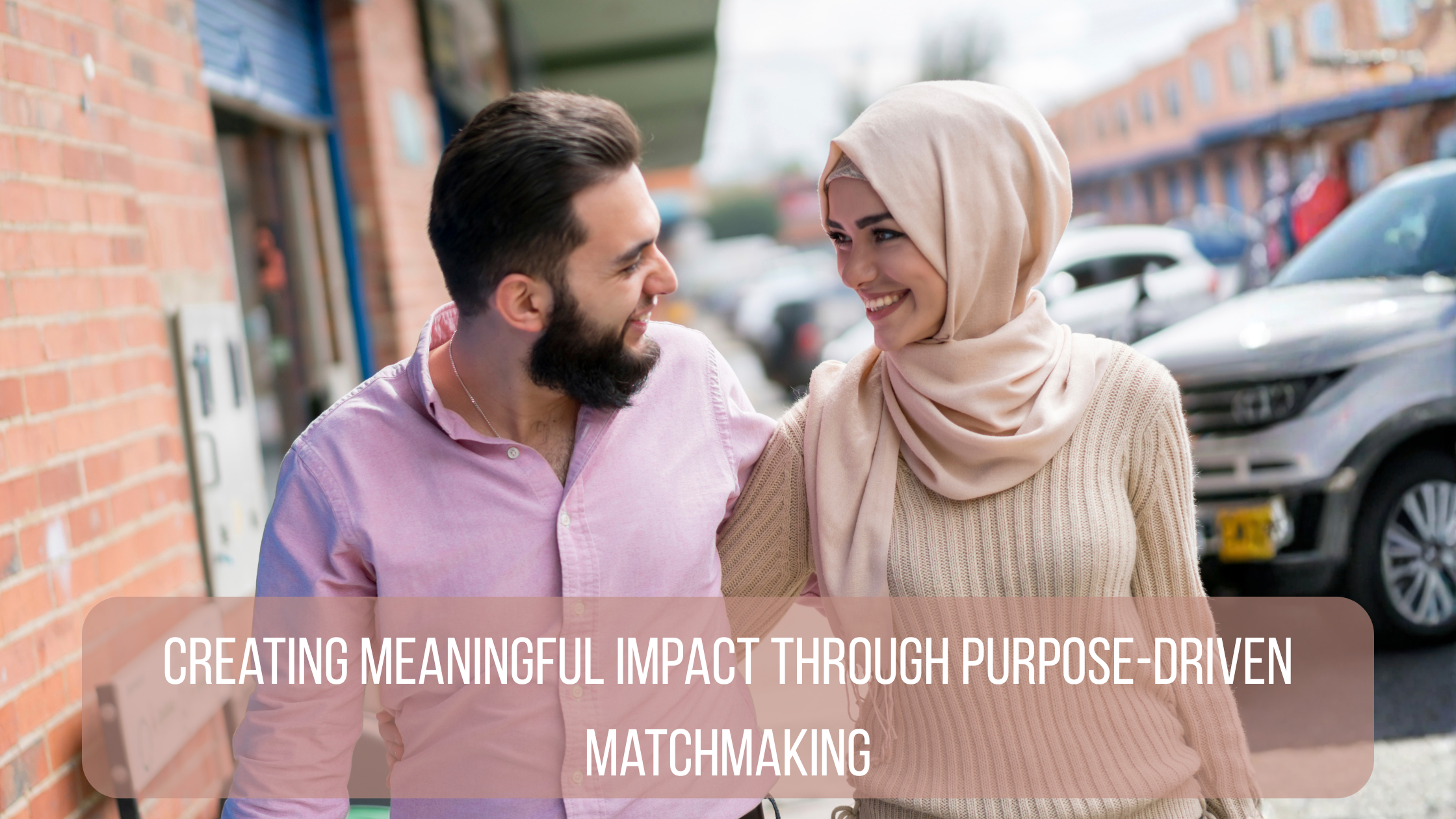
In today’s world, the journey to marriage has become increasingly complex. Many individuals find themselves navigating confusion, mixed intentions, and emotionally draining experiences. What was once a straightforward and community-supported process has, for many, turned into a lonely and uncertain path. In Islam, however, marriage is not just a social milestone, it is an act of عبادah (worship), a means of completing half of one’s deen, and a source of sakoon (tranquility) as described by Allah.
It is within this context that purpose-driven, ethical matchmaking creates a meaningful impact. By bringing structure, sincerity, and Islamic values back into the process, it helps individuals approach marriage not just as a goal, but as a journey rooted in intention and guidance.
One of the most significant contributions of this work is helping individuals address a problem many struggle with: why their search for marriage isn’t working. Often, the issue is not a lack of options, but a lack of clarity and direction. Without guidance, people can fall into repetitive cycles, conversations without purpose, unclear expectations, or decisions driven by pressure rather than اصول (principles). By introducing a more intentional and values-based approach, individuals are able to break these patterns and move forward with clarity, aligning their search with what truly matters in Islam: character, deen, and compatibility.
Another powerful aspect of this work is the opportunity it provides for individuals to learn more about themselves. In Islam, self-awareness is essential; understanding one’s intentions (niyyah), strengths, and areas for growth allows a person to enter marriage with sincerity and readiness. Through guided conversations and reflection, individuals begin to recognise what they truly need in a spouse, not just what they want. This shift helps them make decisions that are not only emotionally sound but also spiritually grounded.
The journey to marriage can often feel isolating, especially when faced with repeated disappointment. Here, the impact goes beyond matchmaking, it creates a space where individuals feel heard, supported, and understood. Islam places great emphasis on compassion and community, and providing a safe environment where people can express their concerns without judgment reflects these values. Feeling understood reduces emotional burden and reminds individuals that they are not alone in their journey.
Clarity and direction are central to making the right decisions, and this is where guided matchmaking proves invaluable. Instead of navigating uncertainty, individuals are equipped with the tools to approach marriage with confidence. They learn how to communicate honestly, ask meaningful questions, and assess compatibility beyond surface-level traits. This clarity allows them to move forward with tawakkul—placing their trust in Allah while actively taking the right steps.
This balance is beautifully captured in the well-known principle: to trust in Allah while also taking action. Marriage, like all forms of rizq, is written by Allah, but effort and intention remain essential. By combining guidance with reliance on Allah, individuals are able to approach the process with both hope and purpose.
The wider impact on the community is equally significant. Strong marriages form the foundation of strong families, and strong families build healthy communities. By encouraging honesty, emotional intelligence, and Islamic values in relationships, this work contributes to more stable and fulfilling marriages. It helps shift the focus away from superficial معیار (standards) and toward what truly sustains a relationship: mutual respect, shared values, and sincere communication.
In addition, this approach helps reshape perceptions around matchmaking. It moves away from unstructured and often ثقافة-driven practices toward a more ethical, respectful, and faith-aligned process. It reminds the community that seeking marriage should be done with dignity, intention, and adherence to Islamic principles.
Perhaps most importantly, this work inspires hope. It shows individuals that there is a better, more meaningful way to approach marriage, one that prioritises growth, understanding, and sincerity. It motivates them to move away from frustration and toward a path guided by both wisdom and faith.
Ultimately, the impact created goes far beyond successful matches. It helps individuals solve real challenges, gain self-awareness, feel supported, and move forward with clarity and tawakkul. In doing so, it not only brings people together in marriage but also contributes to building stronger relationships, stronger families, and a more connected, faith-centered community.