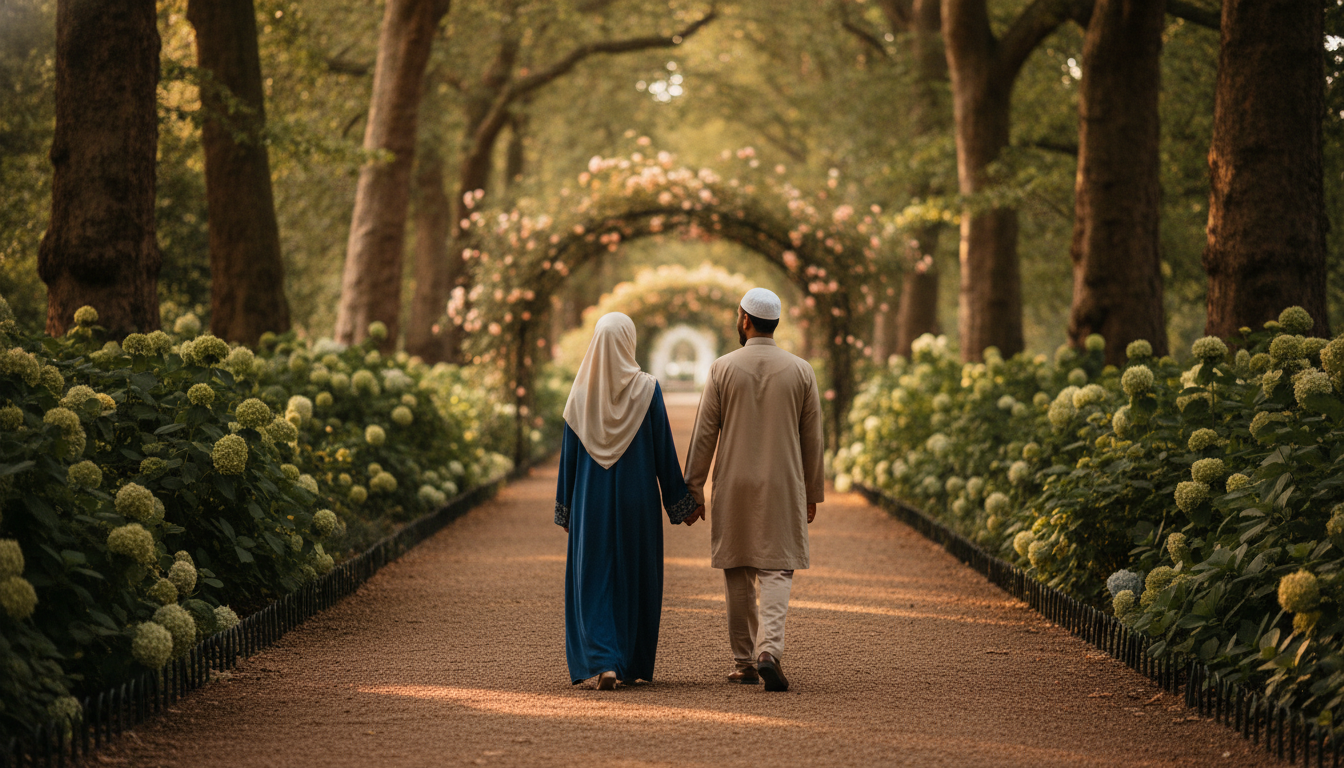

Achieving a successful busy Muslim professional marriage can feel like navigating two completely different worlds. You might spend ten hours a day managing high-pressure projects, treating patients in the NHS, running a growing business, or advising corporate clients across the UK, only to return home exhausted with little mental space left for searching for a spouse. Many brothers and sisters tell me that while their professional lives are thriving, their personal search for a partner feels stalled. It is completely normal to feel torn between your career ambitions and your desire to fulfill half your deen (faith). However, finding a life partner does not require you to sacrifice your career, nor should your career prevent you from building a loving home. With the right mindset, clear boundaries, and a structured approach, you can find a compatible spouse without burning out.
The Reality of Searching for a Spouse While Managing a Demanding Career
When you spend your weekdays making complex decisions, leading teams, or caring for others, switching gears to focus on marriage search requires a totally different kind of energy. Professional success often demands high control, rapid execution, and clear metrics, whereas seeking a spouse involves vulnerability, patience, and emotional openness. Many busy professionals make the mistake of treating the marriage process like another item on an endless task list. They log onto apps late at night when their energy is depleted, swipe aimlessly for a few minutes, send a few brief messages, and quickly feel exhausted by the surface-level interactions.
This cycle of fatigue and frustration often leads to burnout. You might begin to feel that there is simply no room in your life for a relationship right now. But postponing your search until your career is completely settled can be a moving target, because demanding professions rarely become less busy on their own. The key is not waiting for free time to magically appear, but rather renewing your niyyah (intention) and making intentional space for marriage in your current routine. Marriage in Islam is built on companionship, mercy, and mutual support, qualities that can bring genuine peace and stability to a demanding lifestyle.
Why Standard Apps and Events Fall Short for Busy Professionals
If you have tried using online marriage platforms or attending crowded networking events, you already know how time-consuming and inefficient they can be. Algorithmic matching apps rely heavily on superficial profile photos and brief bios, requiring you to screen hundreds of individuals just to find someone who shares your core values. For a doctor, lawyer, engineer, or corporate manager working long hours, spending precious free time filtering through unvetted profiles is simply not sustainable.
Furthermore, endless digital chatting rarely reveals true character. You can spend weeks messaging someone only to discover during your first meeting that your values, life goals, or communication styles are completely misaligned. This trial-and-error approach drains your emotional energy and distracts from your work. When comparing matchmaking vs apps, busy professionals usually realise that privacy, thorough vetting, and genuine human understanding save vast amounts of time and preserve personal dignity.
Practical Steps for Busy Muslim Professional Marriage
Finding a life partner while managing a demanding career requires a strategic and structured approach. You do not need more options; you need the right options presented with clarity and respect for your time. Here are practical ways to streamline your search:
1. Define Non-Negotiables vs. Flexible Preferences
Before starting or continuing your search, take time to clarify what truly matters to you in a spouse. Distinguish between core values—such as spiritual practice, character, emotional maturity, and family goals—and secondary preferences, such as specific job titles or regional locations. When you have absolute clarity on what is essential, you will not waste time considering matches that do not align with your core criteria. For a deeper look into this process, read our guide on why clarity matters before choosing a life partner.
2. Schedule Dedicated Time for Your Search
Treat your search for a spouse with the same respect you give to key professional commitments. Instead of checking apps or responding to inquiries sporadically during work breaks, set aside dedicated blocks of time during your week. Whether it is two hours on a Saturday morning or an hour on Wednesday evening, focused attention leads to better decisions and prevents your search from creeping into every spare moment of your day.
3. Be Honest About Your Lifestyle and Availability
When communicating with potential candidates, be transparent about your work schedule from the beginning. If your profession involves night shifts, frequent travel, or intense seasonal deadlines, discuss how you manage your work-life balance and what kind of support you expect in a marriage. A compatible partner will respect your dedication and understand your schedule, provided you are clear, consistent, and present when you do communicate.
Navigating Halal Courtship on a Tight Schedule
When time is limited, every conversation counts. Participating in halal courtship (the permissible process of getting to know a potential spouse within Islamic guidelines) does not mean dragging out meetings for months without direction. In fact, keeping the process structured, purposeful, and transparent benefits both parties.
Focus your conversations on meaningful topics early on. Ask direct questions about life goals, financial expectations, family involvement, conflict resolution, and spiritual habits rather than sticking to casual small talk. To make the most of your meetings, review our advice on halal courtship and getting to know someone the right way. Structure your meetings thoughtfully, involve your wali (guardian) or family at an appropriate stage, and keep communication clear so that neither person feels their time is being wasted.
Overcoming Perfectionism and Cultural Expectations
High-achieving professionals are often used to setting high standards and achieving them through effort. While high standards are commendable in your career, applying rigid perfectionism to marriage can become a barrier. No prospective partner will check every single box on an exhaustive wishlist. Expecting a potential spouse to have an impeccable career, perfect religious practice, identical hobbies, and flawless communication from day one is unrealistic.
In Islamic tradition, compatibility, known as kafa'ah, emphasizes shared values, mutual respect, and religious understanding rather than identical socioeconomic credentials. Furthermore, family and cultural expectations in the UK can sometimes add pressure, urging you to meet specific professional or cultural criteria that may not align with your personal values. It is important to distinguish between sound Islamic principles and societal pressures, focusing on character, kindness, and spiritual alignment above all else.
Choosing a Confidential and Tailored Route
For many Muslim professionals in the UK, privacy and discretion are paramount. You may not want your personal details or photos visible on public apps, nor do you have time to field unvetted rishta (marriage proposal) suggestions from distant acquaintances. Seeking professional support can transform your experience from a stressful chore into a calm, focused journey.
Utilising a personalised Muslim matchmaking service allows you to hand over the time-consuming work of searching, screening, and background checking to experienced professionals. At PMUK, we take the time to understand your character, lifestyle, faith, and marriage goals, introducing you only to individuals who are genuinely compatible and ready for marriage. This offline, private approach respects your time, protects your dignity, and lets you focus on building a meaningful connection.
Taking the Next Step Towards Your Future
Finding a spouse as a busy professional is not about working harder or searching longer—it is about searching smarter and keeping your trust in Allah (tawakkul). Take a moment to reflect today: Is your current approach to finding a spouse serving your emotional and spiritual well-being, or is it adding to your stress? If you are ready to move away from endless swiping and adopt a private, dignified, and structured process, consider how a tailored matchmaking approach could support your goal of building a happy, faith-centred home.
Frequently asked questions
How can a busy Muslim professional balance work and searching for marriage?
The best approach is setting dedicated blocks of time for your search rather than letting it consume your workday. Focus on clarity regarding your core values, communicate openly about your schedule, and choose private, structured matching methods over aimless app swiping.
Is it possible to find a compatible spouse without using dating or marriage apps?
Yes, many Muslim professionals prefer offline, private matchmaking services that conduct background vetting and character assessments. This saves time, protects personal privacy, and connects you directly with serious candidates.
What does Islam say about compatibility in marriage for professionals?
In Islam, compatibility (kafa'ah) focuses primarily on shared values, character, deen, and mutual respect rather than matching identical job titles or income levels. Focusing on character and faith creates a strong, lasting foundation.